

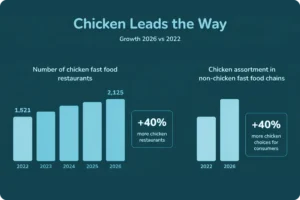
Chicken ranges at non-chicken fast-food chains grew by 40% between 2022 and 2026, according to Meaningful Vision data. Over the same period, the number of tracked chicken fast-food chain restaurants rose from 1,521 to 2,125, also an increase of around 40%.
For operators, these figures reveal two sources of growing competition. Specialist chains are opening more restaurants, while burger and pizza brands are giving customers more reasons to buy chicken from them. A competitor does not need to open a new outlet to change the choices available on your high street.
In this article, I look at what is driving UK chicken market growth, how the competitive landscape is changing and which data operators should use to guide their menus, pricing and promotion
Chicken growth in a declining fast food market
Chicken restaurant visits increased by 8.9% year on year in H1 2026, while overall fast-food traffic fell by 0.9%. Ethnic cuisine was the only other fast-food segment to grow, with visits up 4.2%.
As I explored in Why Is Chicken Outperforming the UK Fast-Food Market?, chicken traffic growth accelerated during the second quarter. Yet a growing category does not guarantee stronger performance at every existing restaurant. New openings contribute to total visits, so operators need to assess traffic at individual locations alongside estate expansion.
Our analysis of which brands are driving UK QSR openings provides further context on the brands and locations attracting investment. For chicken operators, that expansion is now only part of the competitive picture.
A 40% increase in chicken assortments outside specialist chains means customers have a wider choice of wings, tenders and boneless bites across the fast-food market. These products can serve as snacks, additions to an existing order or the centre of a sharing meal.
Domino’s rolled out Chick ’N’ Dip across its UK and Republic of Ireland stores in February 2026, following a regional trial. The range includes tenders, wings and boneless bites, paired with nine dips. Burger King UK has added Crispy Chicken Tenders, while Wendy’s offers chicken tenders, wraps and chicken options within its Biggie Bag deals.
These brands already have established customer relationships and ordering channels. Adding a broader chicken offer gives customers another reason to use them, including for occasions that a chicken specialist might otherwise have served.
I would therefore encourage chicken operators to review every nearby brand offering a comparable meal. The relevant comparison may be a pizza chain’s chicken sharing bundle or a burger chain’s value deal, depending on what the customer wants to spend and who they are eating with.
Why chicken appeals to younger customers
Value, flavour and an informal setting help explain chicken’s appeal to younger customers. Meals priced at around £10 to £15 can make eating and meeting friends more affordable than a longer visit to a casual dining restaurant. Wings, tenders, loaded fries and dips also lend themselves to sharing.
Brands such as Wingstop, Popeyes and Dave’s Hot Chicken bring distinctive flavours and social media visibility. Sauces, spice levels and limited-time offers give customers something new to try, while visually appealing food and spicy challenges can encourage online interest.
Quick service and no booking requirement make spontaneous visits easier. For operators, the lesson is to consider the whole social occasion: the cost of a group order, the choice of flavours and how easily customers can share the food.
The evening opportunity for chicken operators
Visits to quick-service restaurants after 6pm increased by 5.1% year on year in H1 2026. This figure covers QSR overall, rather than chicken specifically, but it gives operators a reason to examine their own evening performance.
An evening sharing offer may meet a different need from a lunchtime meal for one. Opening hours, staffing, drinks and promotions should reflect the occasions a location can realistically serve.
The wider competition for informal meet-ups also includes cafés. In Which Coffee Chains Are Winning Afternoon?, I examined how afternoons reached 27% of daily coffee shop and bakery visits. That is a share of traffic, rather than a growth rate, but it illustrates why operators should assess competition by time of day as well as food category.
What chicken operators should monitor next
In The Chicken Battle and Why National Averages Miss the Point, we explored how differently the category is developing across locations. The same local approach should now include menu expansion at existing burger and pizza outlets.
Track menu changes beyond chicken specialists
Monitor new chicken products, portion sizes, dips and sharing formats at nearby QSR brands. A new bundle at an established competitor may affect your offer before another specialist opens.
Compare the cost of a complete meal
Assess comparable portions, sides, drinks and paid extras across in-store, app and delivery menus. A low headline item price may tell you little about what a customer pays for the whole order. Our guide to tracking competitor menu prices explains how to make these comparisons.
Review promotions by location and daypart
Look at when offers run, which channels carry them and whether they target individuals or groups. Use that context to identify where your own promotion could address a specific gap in demand.
Measure performance at existing sites
Review visits per outlet and your own sales, average order value and margins. Test whether a new flavour or bundle attracts additional business and delivers a worthwhile return before extending it across the estate.
How Meaningful Vision supports better decisions
Meaningful Vision’s intelligence platform brings together competitor menu, pricing, promotion, location and customer traffic data. Operators can use this information to see where chicken ranges are expanding, compare local meal offers and understand which dayparts are gaining or losing visits.
Combined with your own sales and margin data, these insights can help you decide where to test a sharing bundle, adjust a meal price or strengthen an evening promotion. Chicken’s growth creates opportunities, but the right response will depend on the customers and competitors around each restaurant.
Book a call with our team to understand which competitors and meal occasions to track, and how to use those insights to improve your chicken offer.

CEO, Meaningful Vision